Heritage & Faith
Historic archives and writings that trace the journey of the Church of North India through decades of unity and faith.
Origin and History
The movement towards Church Union in North India began in 1929 through a series of consultations. Over time, a “basis of negotiations” was formed through multiple Round Table Conferences, paving the way for unity.
In 1951, a negotiating committee was established by the uniting bodies — the United Church of Northern India, the Church of India, Pakistan, Burma and Ceylon, the Methodist Church in Southern Asia, and the Council of Baptist Churches in Northern India. Later, in 1957, the Church of the Brethren and the Disciples of Christ joined this union process.
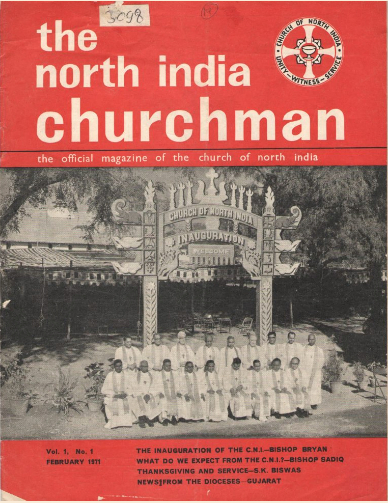
The final plan for union was completed in 1965, leading to the official inauguration of the Church of North India (CNI) on 29th November 1970 in Nagpur. Though the Methodist Church in Southern Asia did not join, the Methodist Church (British and Australasian Conferences) did.
The unity movement was built on the conviction that a divided Church cannot bear effective witness to the one Gospel and one Lord — especially in a nation as diverse as India. Guided by the Holy Spirit, unity was achieved in doctrine, sacraments, and ministry — embracing Bishops, Presbyters, and Deacons within one fold.
Episcopacy was accepted both constitutionally and historically, ensuring space for diverse liturgical and theological expressions. On that historic day, six churches united to form the Church of North India: the Council of Baptist Churches in Northern India, the Church of the Brethren in India, the Disciples of Christ, the Church of India, the Methodist Church (British and Australasian Conferences), and the United Church of Northern India.